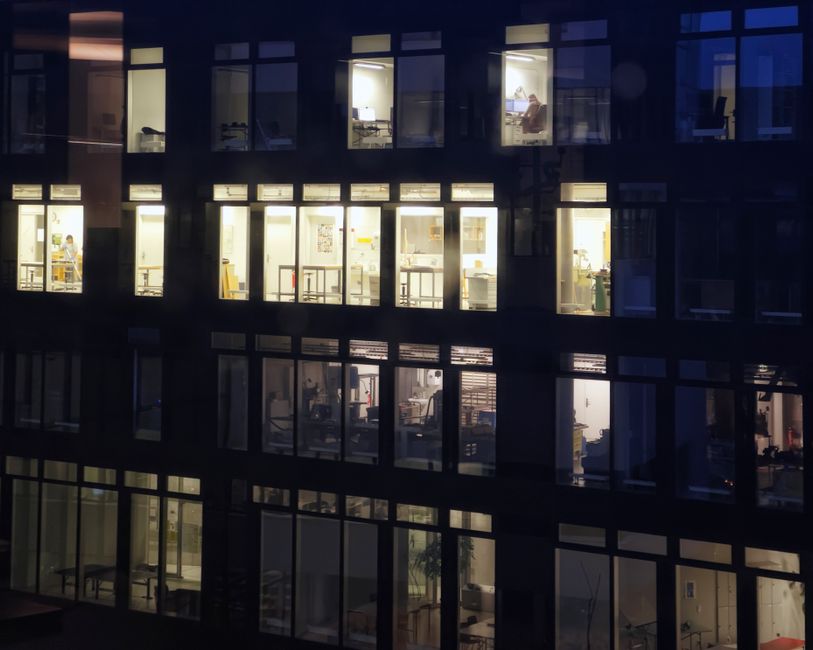
San Diego's commercial real estate market registered its sharpest quarterly tightening since late 2023, with average asking rents for Class A office space in the downtown core climbing to $4.85 per square foot per month as of June 30, according to figures compiled by the San Diego County Assessor's Office and cross-referenced with regional brokerage data. That number was $4.42 twelve months ago. Businesses renewing leases this summer are walking into a different negotiation than they faced last year.
The timing matters. With geopolitical instability rattling supply chains — war in Ukraine grinding through another brutal chapter, energy shortages rippling across Russia, and Iran entering a period of profound political transition following the death of its supreme leader — San Diego's export-dependent industries, particularly the defence and biotech sectors concentrated around Torrey Pines Road and the Sorrento Valley corridor, are recalibrating cost projections for the second half of 2026. The port at National City processed roughly $19.4 billion in trade volume through the first five months of the year, up 6 percent year-on-year, but freight managers say that pace is expected to slow as European demand softens under the weight of this summer's brutal heatwave and its economic aftershocks.
Labour Market: Tech Cools, Healthcare Holds
San Diego's unemployment rate ticked up to 4.3 percent in May, the California Employment Development Department reported, the highest reading since February 2024. The pain is concentrated. Tech layoffs at several Sorrento Mesa software firms eliminated roughly 1,100 positions between March and June, absorbing much of the gains made during the 2024 hiring surge. Meanwhile, healthcare remains the county's most reliable employer: UC San Diego Health posted 340 open positions as of July 1, ranging from nursing roles at its La Jolla campus to administrative staff needed for the new Hillcrest medical pavilion scheduled to open in October.
Small business owners in the Gaslamp Quarter and North Park report that foot traffic recovered strongly through spring, but that consumers are pulling back on discretionary spending as household credit card debt nationally hit a record $1.21 trillion in Q1 2026. The San Diego Small Business Development Center, which operates out of offices on Camino Del Rio North, logged a 22 percent jump in loan consultation requests during June compared with the same month last year — a reliable leading indicator that operators are feeling squeezed.
Property Pressures and the Industrial Bright Spot
Residential real estate offers a similarly complicated picture. The median sale price for a single-family home in San Diego County stood at $917,000 in June, down slightly from the $938,000 peak recorded in April but still roughly $130,000 above the June 2024 median. Higher-for-longer interest rates — the Federal Reserve held its benchmark rate at 4.75 percent at its June meeting — continue to suppress transaction volume. Escondido and Chula Vista are seeing more activity than coastal zip codes, largely driven by buyers priced out of Encinitas and Del Mar.
Industrial property is the exception to the softening trend. Warehousing and logistics space near Otay Mesa, close to the US-Mexico border crossing that handles more than $70 billion in annual binational trade, is running at 96 percent occupancy. Rents there have risen 11 percent since January. Cross-border manufacturing relationships — particularly in the medical device and electronics sectors anchored by the maquiladora zones just south of San Ysidro — are drawing renewed interest from companies diversifying away from Asian supply chains.
For business owners and investors watching the second half of the year, three things warrant close tracking: the Federal Reserve's September meeting, which most analysts expect will bring either a hold or a 25-basis-point cut depending on July and August inflation readings; the San Diego City Council's vote on updated zoning rules for mixed-use development in Mission Valley, scheduled for August 12; and whether the Port of San Diego's proposed infrastructure expansion at Tenth Avenue Marine Terminal secures its $340 million in federal funding before the Congressional recess. Each of those outcomes will move local numbers in ways that matter well beyond the business pages.